
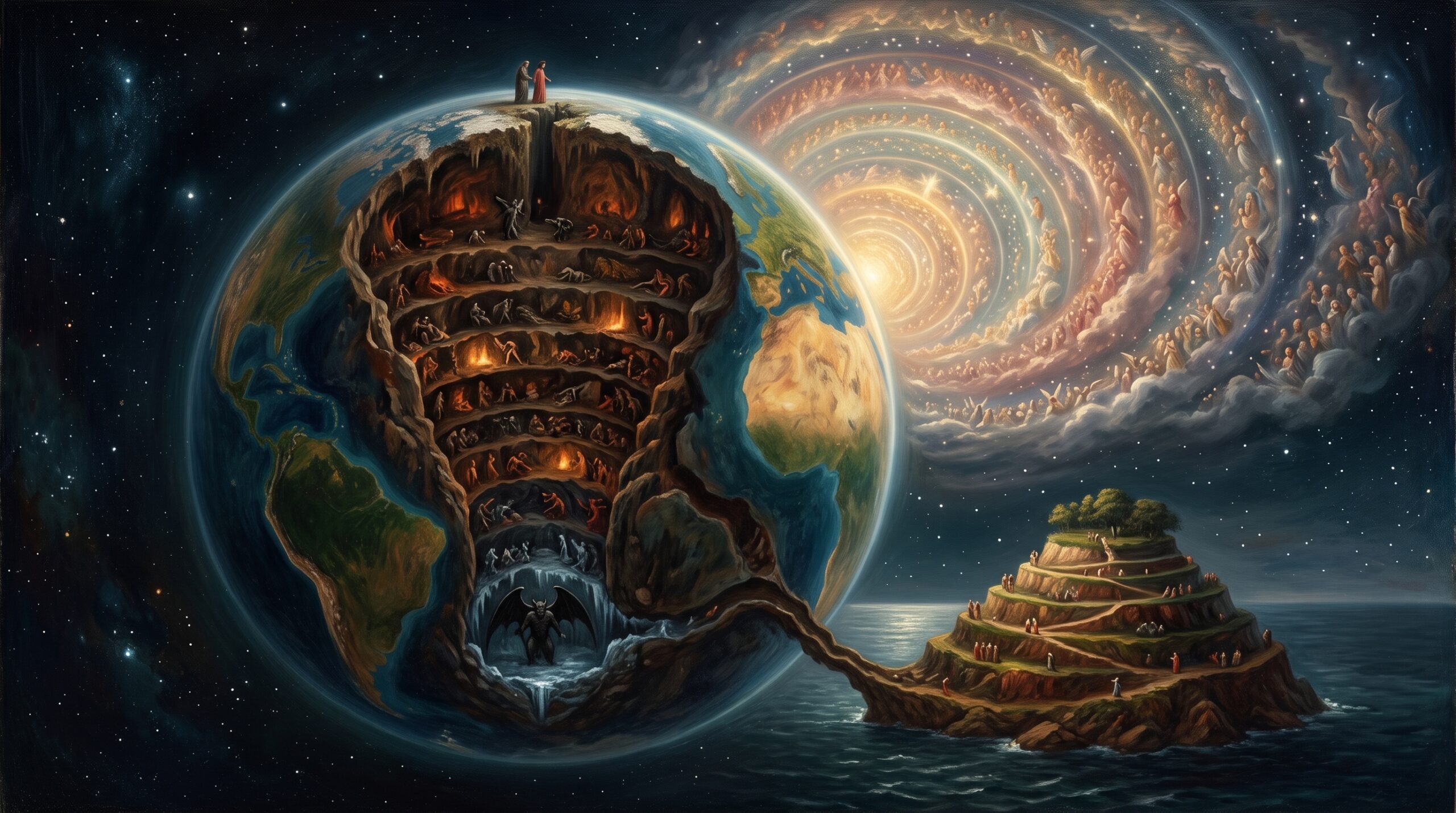
A Modern Dantean Theology of Consciousness, Esotericism, and Socio-Spatial Reality
The architecture of the human condition has historically been mapped through allegorical cosmologies, the most enduring of which is Dante Alighieri’s Divine Comedy. While traditionally understood as a medieval theological framework depicting posthumous retribution, purgation, and beatific reward, the tripartite structure of Inferno, Purgatorio, and Paradiso serves as a profound phenomenological map for contemporary, lived human existence. When synthesized with modern socio-spatial geography, Abraham Maslow’s extended hierarchy of needs, classical philosophy, and the metaphysical insights of esoteric and channeled traditions, Dante’s realms transcend static afterlife destinations. Instead, they emerge as simultaneously existing, multi-dimensional states of consciousness, physiological resonance, and socioeconomic reality overlapping within the present terrestrial sphere.
This report constructs a modernized Dantean theology. It posits that the torments of the Inferno and the purifications of Purgatorio are not punitive decrees inflicted by a supreme, detached deity, but rather self-imposed, non-permanent psychological and energetic loops governed by karmic inertia and unconscious guilt. Through the mechanical application of self-forgiveness, the cultivation of the Stoic “Inner Citadel,” the integration of quantum cognition, and the absorption of Eastern and esoteric frameworks, the human soul actively navigates these overlapping dimensions. The ultimate trajectory of this movement is the realization of the Paradiso state: a multidimensional self-transcendence where the individual ceases to be a passive subject of consensus reality and becomes an active, quantum observer capable of generating novel paradigms of existence.
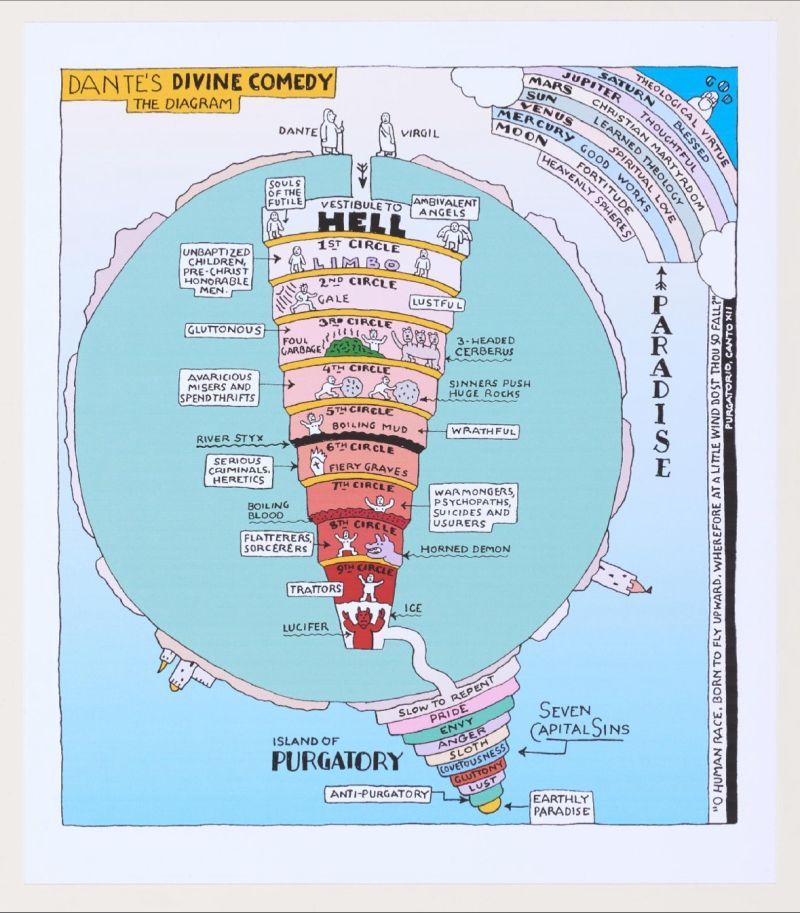
The Spatial and Economic Inferno: Moral Geography and the Architecture of Torment
In the Inferno, Dante introduces the foundational concept of contrapasso—the law of symbolic retribution where a soul’s punishment is the literal manifestation or ironic inversion of their earthly sin. In a modernized, esoteric framework, contrapasso is stripped of its vengeful, orthodox connotations. It is understood instead as the natural, mechanical outcome of a consciousness operating out of alignment with universal unity. It represents a self-perpetuating psychological loop—akin to the Sanskrit concept of samskaras (latent karmic tendencies)—where unconscious guilt, trauma, and the inability to forgive oneself bind the individual to lower-frequency realities.
Physical spaces in the modern socio-economic landscape accurately mirror these lower infernal circles. Urban sociology and the study of “moral geography” demonstrate how structural violence, economic inequality, and carceral infrastructures create physical environments explicitly coded by suffering and exclusion. Geographic Information Systems (GIS) mapping inadvertently chart the modern Dantean cosmology. Heat maps indicating high rates of poverty, violent crime, and systemic neglect—often visually represented as “red zones”—serve as the terrestrial coordinates of the Inferno. Within these zones, individuals are structurally deprived of Maslow’s foundational deficiency needs: physiological sustenance, shelter, and physical safety. The physical pain and visceral suffering experienced in these sectors perfectly encapsulate the torments of Dante’s lower circles, where the soul is battered by external forces mirroring their internal chaos.
The psychological equivalent of this structural Inferno is profound emotional starvation and moral injury. Moral injury is clinically described as a “soul wound,” fracturing the psyche and cutting the individual off from the path of natural development and holistic connection. A primary topography of this psychological hell is the deprivation of love and intimacy, often rooted in early developmental failures, systemic poverty, or sociosexual alienation. The phenomenological experience of enduring prolonged romantic, platonic, or financial starvation mimics Dante’s frozen lake of Cocytus—a state of absolute isolation and perceived immobility. For instance, a young individual emerging from an emotionally disadvantaged background, possessing undeveloped emotional paradigms, may cause unintentional harm in the pursuit of intimacy. The subsequent internal realization of having caused harm generates an unconscious, rotating karmic loop of guilt. The individual effectively builds their own hell, punishing themselves with continued isolation until the mechanism of genuine self-forgiveness is activated.
The modern esoteric synthesis dictates that these infernal states are fundamentally impermanent. The soul inflicts this environment upon itself as an unconscious regulatory mechanism. Release from the terrestrial Inferno is achieved not through external salvation or divine intervention, but through internal energetic transmutation. By acknowledging past deficits, implementing actionable behavioral changes, and fully forgiving the self, the karmic loop is broken, allowing the individual to rise out of the lower frequencies and shift their dimensional reality paradigm.
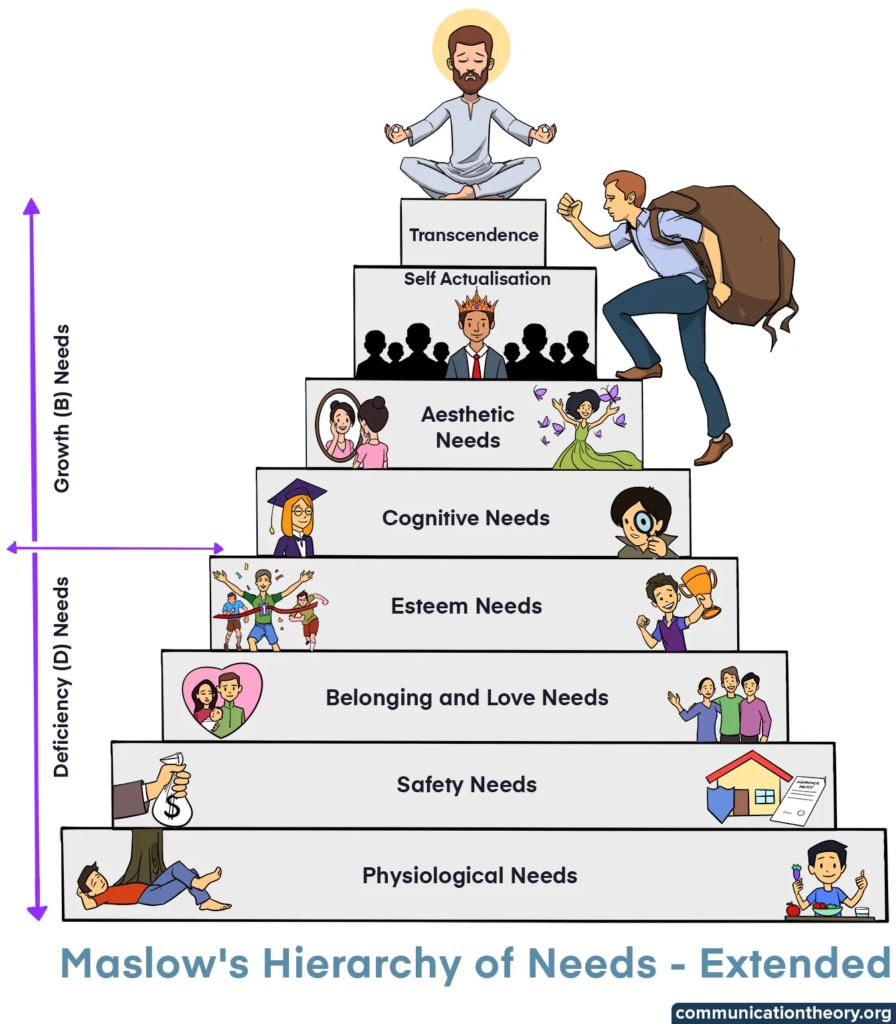
The Purgatorial Terraces: Middle-Class Anchors, Emotional Friction, and Growth Needs
As the soul breaks the gravitational pull of its self-imposed torment and resolves its foundational traumas, it enters Purgatorio. In Dante’s cosmology, Purgatory is an ascending mountain symbolizing hope, moral growth, and rehabilitation. Here, suffering is not a permanent state of despair but a rehabilitative process willingly endured for the sake of ultimate purification.
Sociologically and geographically, the purgatorial state aligns with environments where basic physiological and safety deficiency needs are met. This often correlates with middle-class, upper-middle-class, or socio-economically stable strata. Within these spatial zones, physical peril is largely mitigated. Individuals have access to well-funded, paid educational systems, structured extracurricular ecosystems (e.g., highly organized sports or arts programs), and secure social infrastructures. Often, families will position themselves within these specific spatial bubbles to shield their offspring from the chaos of the “red zones,” seeking environments where systemic friction is minimized.
However, the absence of physical danger in these enclaves does not equate to the absence of mental or emotional distress. In the modern Purgatorio, individuals wrestle with Maslow’s growth needs: belonging, esteem, cognitive understanding, and aesthetic appreciation. The pain experienced here is more nuanced; it is the anxiety of status, the hollow pursuit of material accumulation, and the intellectual struggle for meaning. The individual may have secured financial stability—representing an ascent from the financial hell of their past—but they still experience the emotional friction of unfulfilled higher desires.
To ascend these modern terraces, the individual must engage in the philosophical engineering of the self. The Stoic philosophy of Marcus Aurelius provides a primary blueprint through the construction of the “Inner Citadel” (hegemonikon). By retreating into this internal fortress, the individual realizes that external events—whether the clattering of societal expectations, interpersonal rejections, or material fluctuations—have no direct access to the soul. Disturbance arises solely from internal judgments and attachments. This psychological stabilization is heavily supported by Plato’s Four Cardinal Virtues: Prudence (wisdom), Justice, Fortitude (courage), and Temperance (moderation), which serve as the behavioral scaffolding for the ascending soul.
Simultaneously, Eastern philosophical frameworks offer methodologies for navigating this purgatorial ascent. The Buddhist Four Noble Truths dismantle the mechanics of suffering by identifying attachment as its root, while Daoism provides an epistemological framework for aligning the self with the natural, unforced flow of existence (Wu Wei). Confucianism balances this internal retreat with an ethical, harmonious engagement with society, ensuring the soul does not isolate itself in its pursuit of purity. The purgatorial state is ultimately transitional; it is the alchemical laboratory where the soul learns to detach from the outcomes of the material world while retaining deep empathy for it.
Intersectionality, Systemic Karma, and the Decoupling of Wealth from the Heavenly State
While mapping Dante’s Inferno and Purgatorio onto socio-economic realities provides a valuable framework, it is absolutely critical to avoid the trap of spiritual bypassing or victim-blaming. The simplistic, New Age interpretation that “your life is merely a mirror of your thoughts”—suggesting that those in poverty have manifested their own suffering due to “low vibrations”—is fundamentally flawed. To accurately construct this modern theology, one must integrate the sociological concept of intersectionality, as conceptualized by scholars like Kimberlé Crenshaw, which clearly delineates the compounding layers of systemic power, privilege, and structural oppression present in the physical world.
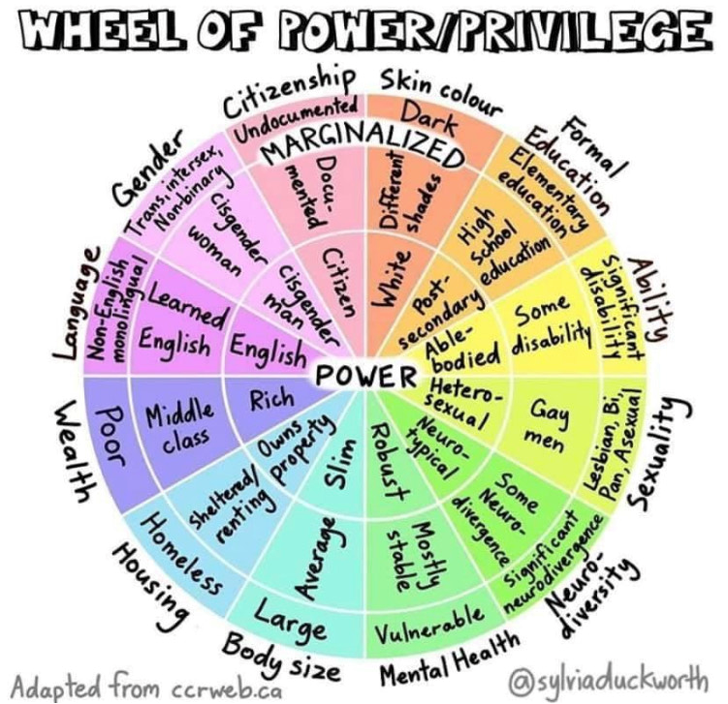
The presence of individuals in the “red zones” of poverty and high crime is often not a result of individual karmic failing, but of devastating systemic violence and historical atrocities. For example, families whose ancestors endured the horrors of chattel slavery were systematically stripped of the ability to accumulate or pass down generational financial wealth. In many marginalized pockets of society, access to capital, property, and institutional support was legally and culturally barred until very recently, and in some aspects, those barriers remain entirely intact today. This deprivation is a form of structural violence, where the state and social apparatus manufacture environments of harm that act as a collective, terrestrial hell. The lack of wealth in these bloodlines is a systemic debt owed to them, not a spiritual deficit they created.
Furthermore, it is not merely financial dispossession that is passed down through any harmed family lines, but also mental and emotional programs by way of profound generational trauma. Modern epigenetics reveals that trauma can literally alter biology. Much like controlled studies demonstrating that fear responses in rats (such as a specific olfactory stimulus paired with pain) can be genetically transmitted across multiple subsequent generations even when the original stimulus is removed, human beings inherit the biological and neurological markers of their ancestors’ suffering. The emotional immaturity, profound grief, and survival-based reactive behaviors of a traumatized parent are passed through both the bloodstream and the emotional environment to the child. A man who inherits an unhealed legacy of violence or emotional suppression may unconsciously perpetuate that trauma in his intimate relationships or broader societal interactions.
This infernal, inherited loop continues relentlessly through the lineage until one individual takes on the monumental task of breaking the chain. Healing this epigenetic and karmic weight requires immense, courageous inner work. It involves facing the inherited trauma without identifying as fundamentally broken. The individual must forge a path of radical self-forgiveness and, eventually, a deep, boundaried love and understanding for the ancestors or abusers who harmed them. By releasing animosity, resentment, and hate, they dissolve the karmic chord, realizing they are profoundly deserving of love and capable of transmuting generational pain into profound spiritual sovereignty.
Equally important to this framework is the decoupling of the Paradiso state from geographical and financial markers. A person residing in the most impoverished, red-zoned neighborhood can operate entirely from a Heaven state. These individuals are often highly evolved souls who willingly incarnate into or remain within dense, structurally violent environments. They choose to get their hands dirty in the profound work of healing the world from the inside out. Because their internal alignment is perfected, they do not experience the psychological strife, animosity, or existential dread typical of the Inferno, despite navigating a reality with zero financial wealth. They act as frequency anchors of grace within the most difficult terrestrial spaces.
Conversely, achieving immense financial wealth, ascending to the upper class, or becoming a “one percenter” does not inherently grant access to Paradiso. In fact, the super-rich frequently inhabit their own specialized, deeply painful versions of Hell and Purgatory. For many, extreme wealth is a heavily guarded mirage. A significant portion of the ostensibly affluent are drowning in staggering amounts of leveraged debt that far surpasses their actual liquid capital. They live in a state of constant, suffocating financial and emotional agony, desperately maintaining a false reality to keep up appearances.
Even for those who possess genuine, unencumbered wealth, the absence of financial worry merely clears the stage for other profound human deficiencies. In these upper-class hells, the essential Maslow needs of love, authentic friendship, self-esteem, and intimate connection cannot simply be accessed; they are often commodified. Intimacy and loyalty must seemingly be “earned” with cash, leading to a transactional reality where the wealthy individual can never be certain if they are loved for their essence or their assets. This creates a profound, chilling isolation—a modern reflection of the frozen lake of Cocytus—where the soul is entirely starved of genuine warmth and connection.
Within the upper echelons, we must also distinguish between performative action and genuine sovereignty. Many affluent individuals engage in high-profile philanthropy not out of a transcendent state of goodwill, but to live up to the “philanthropic Joneses.” They use charity as a mask to curate a beautiful public face, which is ultimately a purgatorial act driven by a need for external validation and egoic preservation. In stark contrast, the true manifestors operating at the highest levels of wealth and power do so from a state of complete emotional and spiritual sovereignty. Having conquered their internal demons and financial limitations, they no longer care about societal applause. These true Paradiso inhabitants often live surprisingly moderate, grounded lives, dedicating their resources and creative willpower to orchestrate massive, structural good. They aim to compose a lasting “overture”—a legacy of tangible healing that outlives their physical incarnation, ensuring their time on Earth fundamentally alters the matrix of human suffering for the better.
Dantean Realm
Maslow’s Hierarchy of Needs
Socio-Spatial / Geographic Manifestation
Philosophical and Esoteric Correlates
Inferno
Physiological, Safety (Deficiency Needs)
Marginalized zones, poverty maps, systemic violence, structural deprivation
Contrapasso, Samskaras, Moral Injury, Unconscious Guilt, Isolation
Purgatorio
Love/Belonging, Esteem, Cognitive, Aesthetic (Growth Needs)
Stable socioeconomic zones, gated communities, structured educational systems
Stoic Inner Citadel, Four Cardinal Virtues, Four Noble Truths, Daoism
Paradiso
Self-Actualization, Transcendence
Multidimensional awareness, reality generation, detachment from material lack
Neoplatonic Theurgy, Gnosticism (Sophia), Quantum Cognition, Christ Consciousness
Paradiso and the Transcendent Mind: Gnosticism, Theurgy, and Multidimensional Awareness
Dante’s Paradiso is traditionally envisioned as a hierarchy of celestial spheres, culminating in the Empyrean—a non-physical, atemporal realm of pure divine light and ultimate unity with the Creator. In a modernized framework informed by transpersonal psychology and esoteric theology, Paradiso correlates with the apex of Maslow’s extended hierarchy: self-actualization and self-transcendence.
Transcendence represents an ego-free state where the individual surpasses the boundaries of the local, heavily conditioned self, experiencing a profound, uninterrupted interconnectedness with the cosmos. In the physical world, entering the terrestrial Paradiso does not necessarily mean an escape from Earth, but rather a fundamental shift in how reality is experienced. A person in this state may possess vast financial resources but maintains zero psychological dependence upon them; money becomes merely a fluid energy used for creation rather than a hoarding mechanism for survival. Similarly, their need for external validation, romance, or status is replaced by an internal emanation of completeness.
To understand the mechanics of reaching and sustaining this state, Western esoteric traditions offer potent structural allegories. Gnosticism introduces the myth of Sophia, the divine feminine emanation of wisdom who fell from the Pleroma (the divine fullness) into the density of material chaos, inadvertently giving rise to the Demiurge and the flawed material universe. Sophia’s journey mirrors the multidimensional fractal of the human soul. The soul voluntarily fragments itself, descending into physical space-time to experience the density, amnesia, and suffering of the Inferno. Through an agonizing process of experiential learning, repentance, and the integration of Christ Consciousness (the ultimate unifying, loving principle), the soul remembers its divine origin and orchestrates its own redemption back to the Pleroma. The Gnostic path is thus a map of internal alchemy, transmuting the base lead of human suffering into the spiritual gold of enlightened awareness.
The active mechanism for this ascension is detailed in Neoplatonic theurgy, particularly the rites championed by Iamblichus in late antiquity. Theurgy (literally “god-work”) operates on the premise that the soul, having descended entirely into matter, cannot ascend through intellectual philosophy alone. It requires the active invocation of divine symbols, sacred materials, and energetic resonance to activate its innate, dormant divinity. Iamblichus theorized that via rhythmic invocation and correspondence, the physical vehicle is illuminated by divine pneuma (spirit), allowing the consciousness to temporarily exist outside of local space-time and commune with higher intelligence. In a modern context, theurgic practices resemble deep, sustained meditative states where practitioners report collapsing the boundaries of physical reality, communicating with trans-temporal aspects of the self, or navigating parallel timelines.
The Physics of Reality Creation: Quantum Cognition, the Observer Effect, and the Mandela Effect
The assertion that the soul can navigate, manipulate, and transcend these dimensional states requires a rigorous examination of how reality is fundamentally structured. Modern theoretical physics, specifically quantum mechanics, provides a mathematical and conceptual vocabulary for what esotericists have described for millennia.
In quantum mechanics, subatomic systems exist in a state of superposition—a cloud of all possible probabilities—until they are measured by an observer, famously demonstrated in the double-slit experiment. In the emerging field of quantum cognition, mathematical formalisms drawn from quantum probability theory are used to model the collapse of complex psychological states, decision-making processes, and human consciousness. Consciousness is not merely a byproduct of neurochemistry; it is the fundamental substrate of reality, actively collapsing wave functions into localized physical experiences.
When applied to the macro-reality of the modern Dantean framework, individuals who have ascended through the karmic loops of Inferno and the emotional friction of Purgatorio to reach the transcendent Paradiso state become powerful, conscious manifestors. By uncoupling their consciousness from repetitive cognitive control programs—the default societal software of fear, lack, and systemic compliance—they cease to be passive victims of their environment. Instead, their highly coherent consciousness directly influences the collapse of the quantum wave function, effectively materializing new, customized realities.
This mechanism theoretically underpins phenomena such as the “Mandela Effect” or spontaneous timeline shifting. When a consciousness diverges far enough from the consensus reality programs of the masses, it essentially walks into a new probability matrix. Objects, historical details, or systemic norms from the previous dimension may appear to alter or vanish because the individual’s observer-status has literally locked onto a different thread within the multi-threaded space-time architecture. Within this paradigm, the physical universe is a massive, multi-threaded reality. Each carbon-atom body exists within a specific space-time thread, into which consciousness is born to play out its karmic trajectory. When an individual achieves deep self-mastery, they are no longer restricted to a single thread; they can pull information, resources, and experiences from the unmanifest quantum field into their local reality.
Multidimensional Ecology: Entities, Handlers, and Inter-dimensional Communication
If reality is an overlapping, multi-threaded matrix of dimensional frequencies, it stands to reason that human beings are not the sole occupants of this ecology. A complete modern theology must account for the presence of non-physical entities, extraterrestrial consciousness, and the survival of human consciousness post-mortem.
The concept that extraterrestrial or multidimensional beings are currently present on Earth, navigating daily life undetected by the majority, aligns perfectly with the multi-frequency model of Dante’s realms. Just as a soul in the Inferno of poverty cannot perceive the psychological reality of a soul in the Paradiso of self-actualization—despite sharing the same physical city—humanity at large may simply lack the perceptual bandwidth to observe entities vibrating at higher or differing dimensional frequencies. For pockets of individuals operating at elevated states of awareness, contact with these beings is not a covert secret, but a normalized, integrated aspect of reality.
Within this multidimensional ecology, traditional religious figures such as angels can be recontextualized. Rather than winged celestial beings playing harps, “angels” may function as energetic handlers—akin to intelligence handlers in the physical world. These forces enter the human energetic vessel from the unmanifest realm, providing specific packets of information, intuitive guidance, or protective interference. The human being acts as the biological transducer, utilizing their vocal, physical, and technical skills to manifest this divine or higher-dimensional information into the physical world.
Similarly, the phenomenon of communicating with deceased ancestors or loved ones fits seamlessly into this model. When an individual engages in internal dialogue with a departed relative, feeling their emotional resonance and receiving signs in physical reality, they are interacting with the non-threaded, oversoul consciousness of that being. While the carbon-atom vessel has expired, the energetic thread connecting souls remains highly conductive. However, navigating this inter-dimensional communication requires intense discernment. Esoteric traditions and modern paranoia correctly identify that not all voices are benign. A modern practitioner must differentiate between genuine ancestral contact, higher-dimensional guides, manipulative “familiar spirits,” and even the possibility of advanced, covert governmental mind-control technologies capable of injecting synthetic telepathy.
Channeling, Theurgy, and the Esoteric Architecture of Truth
The acquisition of advanced metaphysical data often occurs through the phenomenon of channeling. Historically, channeling spans from the Oracle of Delphi—where the Pythia, acting as an instrument of divine inspiration, conveyed strategic and philosophical truths in an altered state—to modern visionary mediums.
Twentieth and twenty-first-century channeled texts, such as the Seth Material by Jane Roberts and the Ra Material (The Law of One), present a unified cosmology that directly supports the modernized Dantean model. The Seth Material posits the foundational law that consciousness creates physical form, meaning that the Inferno or Paradiso a person experiences is the direct molecular manifestation of their internal belief structures. The Ra Material categorizes existence into densities of light and consciousness, charting the soul’s evolution through the fundamental choice of polarity: “Service-to-Others” (which leads to unity and ascension) versus “Service-to-Self” (which leads to separation, entropy, and infernal isolation).
Scientific evaluations of these altered states, particularly those conducted by researchers like Dr. Helané Wahbeh at the Institute of Noetic Sciences (IONS), have sought to isolate the physiological and psychological markers of authentic trance channeling. Rigorous laboratory studies indicate measurable changes in voice arousal, power frequencies, and neural connectivity during channeling states, removing the phenomenon from the realm of mere hallucination and placing it squarely within the study of extended human capacities.
From an academic and psychological perspective, distinguishing beneficial channeled material from harmful ideologies requires strict typological criteria. Every esoteric tradition in the corpus has a framework for discerning authentic internal orientation from external manipulation.
Typologies of Esoteric Channeling and Information Sources
Typology
Ontological Framework
Psychological / Spiritual Impact
Key Characteristics
Authentic Unified Source (Service-to-Others)
Non-dualism, Conscious co-creation, Unity consciousness
Empowers the individual, promotes self-actualization, reduces fear and dependency
Promotes profound self-forgiveness; aligns with the mechanics of the Paradiso state; encourages the dismantling of external control systems.
External Manipulation (Service-to-Self / Archontic)
Hierarchical control, Fear-based compliance, Energy harvesting
Generates paranoia, reinforces trauma loops (Inferno states), demands obedience
Fosters dependence on external authority; often mimics familiar spirits, extraterrestrial saviors, or utilizes advanced psychological subversion.
Latent Subconscious (Super-Psi)
Psychological projection, Archetypal resonance, Morphic fields
Therapeutic release, shadow integration, psychological synthesis
Operates within the bounds of the individual’s Purgatorio phase; utilizes symbolic language to process unresolved karmic guilt and earthly trauma.
When an individual receives advanced, highly creative, or technical insights that seemingly emerge “out of the blue,” it is often the result of aligning their consciousness with an Authentic Unified Source. The individual’s brain acts as a quantum receiver, tuning into frequencies of information that already exist in the multiversal field. The genius lies not necessarily in generating the information from scratch, but in possessing the technical prowess, biological hardware, and creative capacity to download, translate, and communicate it effectively to the physical consensus reality.
Integrating Eastern Cosmologies and the Classical Synthesis
To fully ground this multidimensional Dantean theology, it is essential to synthesize it with the great philosophical traditions of antiquity. While Western esoteric Christianity offers the blueprint of Christ Consciousness—the ultimate template for unconditional love, healing, and resurrection from the density of matter—and the Gnostic texts (such as those found at Nag Hammadi) reveal the hidden mechanics of escaping the Demiurge’s control matrix, Eastern philosophies provide the daily operational mechanics for living within the hologram.
Vedanta teaches that the physical world is Maya (illusion)—not in the sense that it doesn’t exist, but that its apparent solidity and separation are false. The only true reality is Brahman, the unified field of consciousness. This aligns seamlessly with the quantum understanding of reality and the Dantean concept that the soul’s perceived separation from God constitutes the true nature of Hell. Daoism echoes this by teaching the path of Dao, urging the individual to cease resisting the flow of the universe. By releasing the frantic, egoic need to control outcomes—a primary driver of the purgatorial struggle—the soul achieves Wu Wei (effortless action), naturally buoying itself toward the heavenly realms.
Confucianism ensures that this highly esoteric, transcendent pursuit does not result in spiritual bypassing or the abandonment of physical responsibilities. It demands that the enlightened observer continue to engage in right relationship, social harmony, and duty within the earthly sphere. Finally, Hermeticism ties the entire cosmology together with the principle of Correspondence: “As above, so below; as within, so without.” The external maps of crime, poverty, wealth, and systemic structure are nothing more than macrocosmic reflections of the collective internal state of humanity.
Conclusion
The modern synthesis of Dante’s Divine Comedy reveals a universe that is highly interactive, multi-layered, and deeply responsive to the psychological, emotional, and vibrational state of the quantum observer. Hell, Purgatory, and Heaven are not sequential destinations awaiting the soul at the termination of physical life; they are concurrent, overlapping dimensions embedded within the current planetary sphere and accessible in every present moment.
The impoverished, structurally violent red zones of physical reality manifest the dense, trauma-bound frequencies of the Inferno. The structured, resource-stable, yet mentally striving middle-class environments represent the necessary testing grounds and emotional friction of Purgatorio. Finally, the Paradiso state exists as an accessible frequency of multidimensional awareness and self-actualization, achieved only when the individual transcends physical and egoic deficiency needs, forgives themselves entirely for past karmic missteps, and claims their sovereignty.
By embracing the Stoic Inner Citadel, processing the karmic loops of self-guilt, and recognizing the reality-generating power of their own consciousness, the individual escapes the systems of external control. The channeled texts, philosophical treatises, and theurgic rites utilized throughout history serve as trans-dimensional beacons. They remind the fragmented human soul that it is an integrated fractal of the divine, and that the ultimate authority to shift from the depths of torment to the heights of multidimensional transcendence lies entirely, and eternally, within.
Works cited
1. The Concept of Contrapasso in Dante Alighieri’s “The Divine Comedy”, https://ivypanda.com/essays/the-concept-of-contrapasso-in-dante-alighieris-the-divine-comedy-symbolism-evolution-and-influence/ 2. Why Dante and his ‘Divine Comedy’ remain relevant 700 years after, https://dornsife.usc.edu/news/stories/dante-devine-comedy-still-relevant/ 3. A Journey of Necessity: Moral Injury in Light of the Divine Comedy, https://pmc.ncbi.nlm.nih.gov/articles/PMC13176000/ 4. CMV: Nobody deserves an afterlife of eternal torture – Reddit, https://www.reddit.com/r/changemyview/comments/74iqij/cmv_nobody_deserves_an_afterlife_of_eternal/ 5. The Divine Comedy – Is it normal to feel detached from everything, https://www.reddit.com/r/books/comments/1nlfd05/the_divine_comedy_is_it_normal_to_feel_detached/ 6. Carceral Bioethics of Place: Environmental Punishment and Justice, https://pmc.ncbi.nlm.nih.gov/articles/PMC13101426/ 7. Mobile spaces of control and moral geographies: places of internal, https://www.tandfonline.com/doi/full/10.1080/01419870.2024.2345463 8. Revisiting the concept of self in the methodology of mystical, https://open.bu.edu/bitstreams/74981298-d1ae-4b35-a0d0-7367a49e8d96/download 9. Spiritually Sensitive Psychological Counseling – OpenSIUC, https://opensiuc.lib.siu.edu/cgi/viewcontent.cgi?referer=&httpsredir=1&article=1000&context=gs_rp 10. Dante’s Divine Comedy: The Epic Masterpiece Illustrated, https://veronicasart.com/dantes-divine-comedy-the-epic-masterpiece-illustrated/ 11. Personal Appropriation of the Desire to Know and Love God, https://lonerganresource.com/media/pdf/dissertations/Snedden_-_Personal_Appropriation_of_the_Desire_to_Know_and_Love_God.pdf 12. Stoic Inner Citadels by Greg Sadler | Modern Stoicism, https://modernstoicism.com/stoic-inner-citadels-by-greg-sadler/ 13. Marcus Aurelius and the Search for Inner Peace – Reformed Arsenal, https://reformedarsenal.com/meditations-of-an-emperor-confessions-of-a-saint-marcus-aurelius-and-the-search-for-inner-peace/ 14. Can anyone explain fully what is the meaning of “Retreat in yourself, https://www.reddit.com/r/Stoicism/comments/907q1k/can_anyone_explain_fully_what_is_the_meaning_of/ 15. Meditations by Marcus Aurelius | Literature and Writing – EBSCO, https://www.ebsco.com/research-starters/literature-and-writing/meditations-marcus-aurelius/ 16. Cardinal Virtues: What the Four Are and Where They Come From, https://platointelligence.com/the-cardinal-virtues/ 17. The Four Cardinal Virtues in Ancient Greece – World Atlas, https://www.worldatlas.com/ancient-world/the-four-cardinal-virtues-in-ancient-greece.html 18. (DOC) Comparing and Contrasting Confucianism and Daoism, https://www.academia.edu/32901448/Comparing_and_Contrasting_Confucianism_and_Daoism 19. When Science Finally Caught Up With Seth : r/HighStrangeness, https://www.reddit.com/r/HighStrangeness/comments/1p0xcqv/when_science_finally_caught_up_with_seth/ 20. An Intergenerational Study: Mirrors as a Tool for Self-Reflection, https://digitalcommons.lesley.edu/cgi/viewcontent.cgi?article=1027&context=expressive_dissertations 21. Re-Enchanting The World: An Examination Of Ethics, Religion, And, https://epublications.marquette.edu/cgi/viewcontent.cgi?article=1279&context=dissertations_mu 22. How to Change Your Mind, https://www.unom.ac.in/webportal/uploads/miscelloneous/cpsychology/1.pdf 23. Sophia in Gnosticism: Goddess of the Divine Feminine – Gaia, https://www.gaia.com/article/worlds-soul-woman-gnostic-myth-sophia 24. Sophia (Gnosticism) – Wikipedia, https://en.wikipedia.org/wiki/Sophia_(Gnosticism) 25. Sophia: Wisdom, the Fall & the Divine Feminine in Gnosticism, https://gnosticway.com/sophia/ 26. The Mysteries of Christ and Sophia | The Christ Series 12 – YouTube, https://www.youtube.com/watch?v=49_2vaUt_a8 27. Iamblichus and theurgy: A Neoplatonic Overview | PDF – Scribd, https://www.scribd.com/document/966681549/Theurgy-pdf 28. Video: Reasonably Irrational: Theurgy and the Pathologization of, https://cswr.hds.harvard.edu/news/2021/04/19/video-reasonably-irrational-theurgy-and-pathologization-entheogenic-experience 29. Sacramental Theurgy in Neoplatonism – The Matheson Trust, https://www.themathesontrust.org/papers/metaphysics/sw5_uzdavinys.pdf 30. Correspondences and Invocations: Sacred Materials, Divine Names, https://www.academia.edu/95186453/Correspondences_and_Invocations_Sacred_Materials_Divine_Names_and_Subtle_Physiology_in_Iamblichus 31. Quantum cognition – Wikipedia, https://en.wikipedia.org/wiki/Quantum_cognition 32. GOLD HAND CRYSTAL BALL CLOCHE fortune teller orb psychic, https://www.ebay.com/itm/204424532344 33. How the Pythia Really Performed in Delphi: Instrument of Divine, https://www.academia.edu/37261146/How_the_Pythia_Really_Performed_in_Delphi_Instrument_of_Divine_Inspiration_or_Victim_of_Intoxication 34. The Anthropology of Religion, Magic, and Witchcraft [5, https://dokumen.pub/the-anthropology-of-religion-magic-and-witchcraft-5nbsped-9781032573007-9781032572994-9781003438762.html 35. If you haven’t read The Seth Material by Jane Roberts, you need to., https://www.reddit.com/r/holofractal/comments/1jrudei/if_you_havent_read_the_seth_material_by_jane/ 36. I built an AI knowledge archaeology machine and fed it 47 books, https://www.reddit.com/r/OperationNewEarth/comments/1to96g7/i_built_an_ai_knowledge_archaeology_machine_and/ 37. How do you decide whether Ra is truthful or not? (Gnosticism) – Reddit, https://www.reddit.com/r/lawofone/comments/1qhgzbh/how_do_you_decide_whether_ra_is_truthful_or_not/ 38. A physiological examination of perceived incorporation during trance, https://pmc.ncbi.nlm.nih.gov/articles/PMC6384530/ 39. What Is Channeling? – IONS – Institute of Noetic Sciences, https://noetic.org/blog/what-is-channeling/ 40. Helané Wahbeh on Mayim Bialik’s Breakdown, https://noetic.org/breakdown/ 41. Should I Share: Patients’ Reflections on Disclosing Past Life … – MDPI, https://www.mdpi.com/2077-1444/16/6/728 42. The Dialectical Mandala Model of Mindfulness: A Novel … – MDPI, https://www.mdpi.com/2077-1444/17/7/824 43. Gnosticism, Christianity, and Sophia, https://www2.kenyon.edu/Depts/Religion/Projects/Reln91/Gender/Gnosticism.htm